
Getting Around Tseung Kwan O in 2026: MTR, Tunnels and Buses
Tseung Kwan O may be known as a commuter town, but getting in and out of it has changed a lot in the last few years. New tunnels, a bridge across the bay and fresh bus routes have made the district far better connected than it was a decade ago. Check out this article for a practical guide to moving around Tseung Kwan O in 2026.
The MTR: The Tseung Kwan O Line
For most residents, the Tseung Kwan O Line is still the backbone of daily travel. It runs from North Point and Quarry Bay on Hong Kong Island, through Yau Tong and Tiu Keng Leng, and into the district. Past Tseung Kwan O Station, the line splits in two.
- Po Lam branch: Serves Tseung Kwan O, Hang Hau and Po Lam stations, covering the older northern estates.
- LOHAS Park branch: Heads south to LOHAS Park Station and the newer developments along the southern waterfront.
- Interchanges: Change at Tiu Keng Leng for the Kwun Tong Line into Kowloon, or at North Point and Quarry Bay for the Island Line.
Roads: The Tunnel and the Bridge
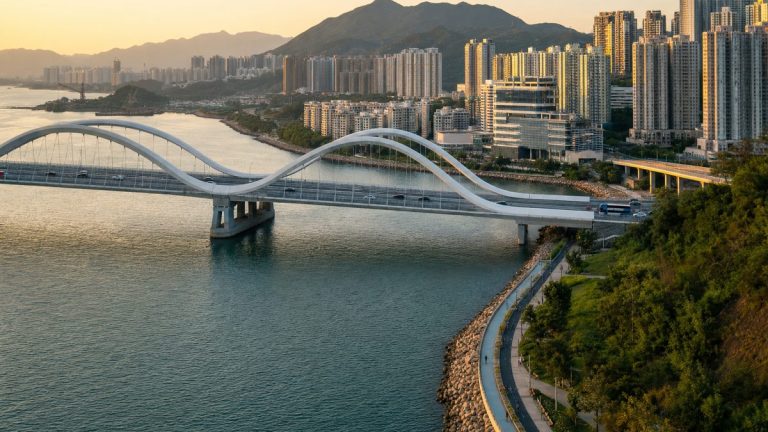
The biggest change for drivers and bus passengers came on 11 December 2022, when the Tseung Kwan O to Lam Tin Tunnel and the Cross Bay Link opened together. The tunnel gives the district a second road link to East Kowloon, and the Cross Bay Link connects it to the southern part of Tseung Kwan O.
The opening came with a welcome bonus. Since that date, both the new tunnel and the older Tseung Kwan O Tunnel have been toll-free. The government estimated that the new route could cut the morning trip from LOHAS Park to Kwun Tong Town Centre by up to about 20 minutes. The Transport Department’s page on the tunnel has the full details.
Buses: New Routes Through the Tunnel
Several bus routes started using the new tunnel the day after it opened, including routes 96, 290E, 298X, 790 and 795. For many residents these offer a quicker ride into Kowloon than the old route over the hill.
Getting to the airport is also simple.
- A28: Runs from LOHAS Park.
- A28X: Runs from Tseung Kwan O Station.
- A29: Runs from Po Lam.
- NA29: The overnight service from Po Lam, useful for early flights.
Since late May 2026, airport-bound A and NA routes also stop at the new Terminal 2 drop-off after Terminal 1, which saves a walk for anyone flying from the new terminal.
Cycling: Two Wheels Along the Bay
Tseung Kwan O is one of the better parts of Hong Kong for getting around by bike. Sai Kung District has about 20 kilometers of cycle tracks, running through Po Lam, Hang Hau, Tiu Keng Leng, the town center south and along Wan Po Road.
The Cross Bay Link added a cycle track and a footway alongside its carriageways. Joined up with the waterfront cycle track, it forms a 5-kilometer coastal loop, handy for short trips between the northern and southern halves of the district as well as for weekend rides.
Getting to Sai Kung
For a change of scene, Sai Kung town is only a short ride away. Bus 792M runs from Tseung Kwan O Station, and green minibus 101M runs from Hang Hau Station. Both are popular on weekends, so expect queues at busy times.
Looking Ahead: What’s Coming Next
More changes are on the way. The Yau Ma Tei section of the Central Kowloon Bypass opened in December 2025, and the final Kowloon Bay section, which links up with the Tseung Kwan O to Lam Tin Tunnel, is scheduled to open in December 2026. Once complete, the route should make driving from Tseung Kwan O to West Kowloon much quicker.
Further out, reclamation off Areas 132 and 137 was authorized in December 2025 for a new community of around 50,000 homes. A proposed southern extension of the Tseung Kwan O Line and a Tseung Kwan O to Yau Tong Tunnel are planned to serve it, though no opening dates have been set yet.
Finding Your Way Around
Whether you’re commuting to the Island every day, catching a flight or just heading out for a seafood lunch in Sai Kung, Tseung Kwan O now has more options than ever. The MTR still does most of the heavy lifting, but the toll-free tunnels and newer bus routes give it real competition.
With more road links on the way, the district’s reputation as a hard-to-reach corner of Hong Kong is fading fast. For newcomers, learning a few key routes is all it takes to feel at home.
